

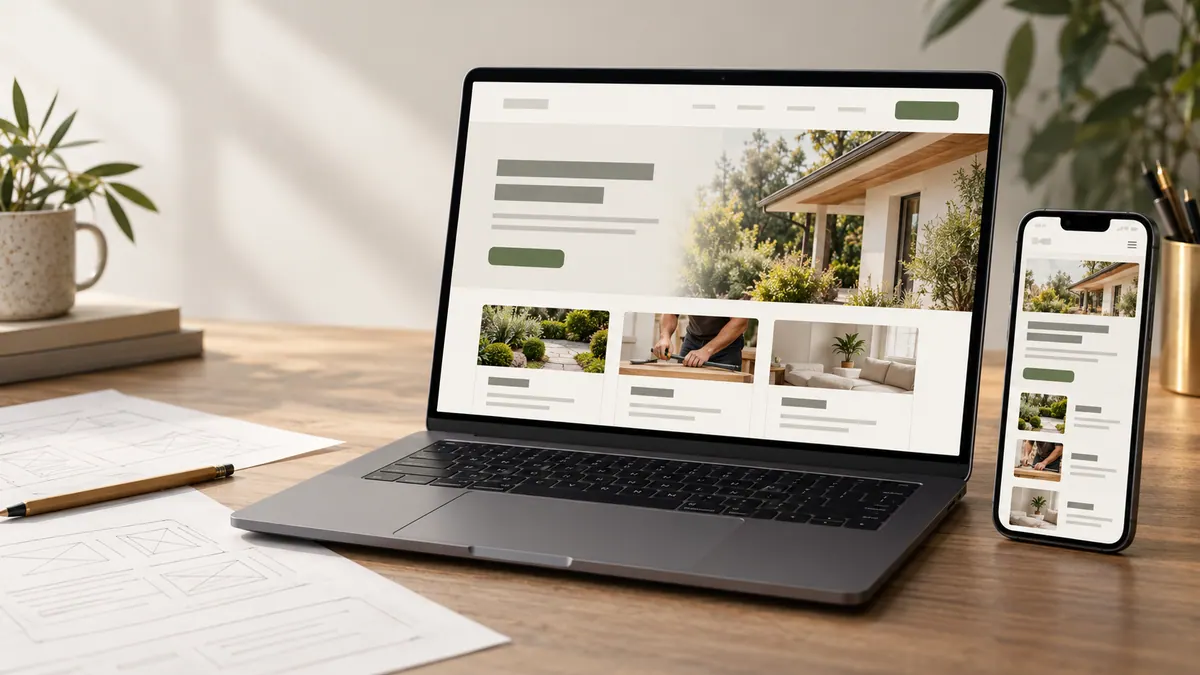
A business can offer five services and still have a website that explains none of them clearly.
It often happens when everything gets squeezed onto one generic “Services” page, or when dozens of nearly identical pages are created because a keyword tool suggested slightly different phrases.
I’d start with the sales conversation instead. What is the customer trying to solve, and what do they need to know before choosing the service?
Start with the customer’s situation
Someone looking for emergency plumbing, a bathroom renovation or a routine inspection may be contacting the same company, but they’re making very different decisions.
Write a sentence for each important service: “This page is for people who need [specific service] because [real situation].”
Then record their urgency, main questions and likely next step. This is a much stronger page brief than a list of keywords alone.
Give each page a clear job
A focused service page should explain what the work includes, who it’s suitable for, what isn’t included, what affects timing or price, and how a customer can enquire.
Put the practical information near the top. A visitor shouldn’t have to scroll through four paragraphs about the company’s passion before learning whether the service fits their needs.
The page can still be visually distinctive. But clarity is the foundation.
Use search terms to check language, not invent services
Keyword research can reveal wording customers commonly use. It can also surface different intentions that need different answers.
Compare search phrases with actual enquiries and the company’s offer. A high-volume phrase isn’t useful if the business can’t provide the service or wants a different type of customer.
Avoid forcing the same exact phrase into every heading. Use natural related words where they help explain the topic.
Separate services only when they’re genuinely different
Two jobs may deserve different pages because they involve different processes, risks, budgets or decision-makers.
But variations that mean essentially the same thing may be better covered in one complete page. Splitting them too narrowly creates thin content and confusing navigation.
For a broader view of what visitors need, see what makes a good small-business website.
Map the next step for each service
Some customers should call. Others need to send photos or request an assessment. A more complex service might need a consultation.
Make the next action appropriate to the work, and explain what happens after someone reaches out. If a quote form asks for detailed information, ensure it’s genuinely needed at this stage.
The mobile quote form guide helps keep that process usable.
Plan supporting content around the main service
A service page can answer the essential questions and link to a guide that explains a more involved topic.
A contractor’s installation page might link to preparation advice and a real project case study. The educational pages can link back to the service when the reader needs professional work.
Use descriptive links that feel like the natural next question. Don’t force all articles to link to all services.
Our internal linking guide explains the method.
Think about local intent separately
A customer may also need to know whether the business serves their town.
Explain operating boundaries truthfully. A main service page can include the relevant service-area information; not every town requires a separate location page.
If you’re considering town-specific content, read how to avoid doorway location pages.
Build a repeatable page brief
For each service, record: the primary customer situation, service name in natural language, what is included, common objections, useful proof, relevant geographic boundaries, meaningful next action and connected supporting pages.
Then write the content in that order. Keep claims accurate and confirm details with the people who deliver the service.
When the business changes, update the brief and corresponding page instead of allowing outdated promises to remain online.
Test the page with someone outside the business
Ask a person who doesn’t know the company to open the page and explain what service it offers, who it’s for and what to do next.
If they can’t do that, improve the writing and structure before worrying about adding more keywords.
A service page is successful when it supports a real customer decision, not simply because it repeats a phrase a certain number of times.
Service pages should answer real customer needs; turning customer questions into SEO content can reveal what belongs on each page.
Frequently asked questions
Does every service need its own page?
No. Separate services when they have genuinely distinct customer needs or useful information. Avoid splitting minor wording variations into thin pages.
Should the keyword be in the H1?
Use a clear topic heading that usually includes the relevant service naturally. Don’t force awkward repetition.
Can several service pages target the same broad topic?
They may overlap, but each should have a distinct purpose. If they answer the same intent, reconsider the structure.
How do I decide which page to write first?
Start with core services customers actually need, particularly those where the current site doesn’t explain the offer or contact path clearly.
A strong service-page structure starts with understanding the customer. Search terms help refine the language after that.